
Yes. A properly drafted and recorded mineral deed transfers Texas mineral rights to an adult child during the owner’s lifetime. The transfer needs no probate and no court. The owner never has to set foot in Texas. This case study shows how that worked for one family, and where do-it-yourself transfers go wrong.
The Situation: Why Transfer Texas Mineral Rights to an Adult Child Now?
A retired mineral owner on the West Coast held a share of family minerals in Northeast Texas. The land sits more than 2,000 miles from her front door. Her family has owned it for generations.
Her goal was simple. She wanted her share in her adult son’s name while she was alive to see it happen. A Client had watched other families lose years untangling mineral rights after a death. She did not want her son to inherit that fight.
Like many out-of-state owners of Texas minerals, she assumed the transfer would be a form and a stamp. Then she started reading about when Texas requires a mineral deed. The more she read, the less simple it looked.
The Challenge: What Goes Wrong With Do-It-Yourself Mineral Deeds?
You might think a mineral deed is a fill-in-the-blank document. Operators see the other side of that assumption every day.
A mineral deed has to satisfy two audiences. The county clerk only checks recording requirements. The operator’s title examiners check whether the deed actually transferred what the family thinks it transferred. Those are different questions with different standards.
Small details sink these deeds. A grantee name that does not match other records. A legal description copied from the wrong document. A signed mineral deed that never reaches the county records. Each of those mistakes can sit invisible for years.
The mistake usually surfaces at the worst time: when an operator is deciding whether to pay someone. An examiner who cannot connect the chain of title does not call the family to work it out. The file simply goes into suspense. The burden of fixing it lands on the next generation.
This family had one more complication. The owner lived in one state, her son lived in another, and the minerals sat in Texas. Three parties, three mailboxes, and no room for error.
Our Approach: How Did the Firm Handle the Mineral Deed Transfer?
Attorney Nixon Daughtrey spent nearly a decade working inside major oil companies as a licensed attorney and landman. His job was finding title problems so those companies could drill. He knows what operators look at when they review ownership documents. He knows what they accept and what they reject, because that review used to be his job.
That perspective shaped the whole engagement. The firm drafted the deed for the title examiner who will read it decades from now. The clerk who stamps it next month was the easy audience.
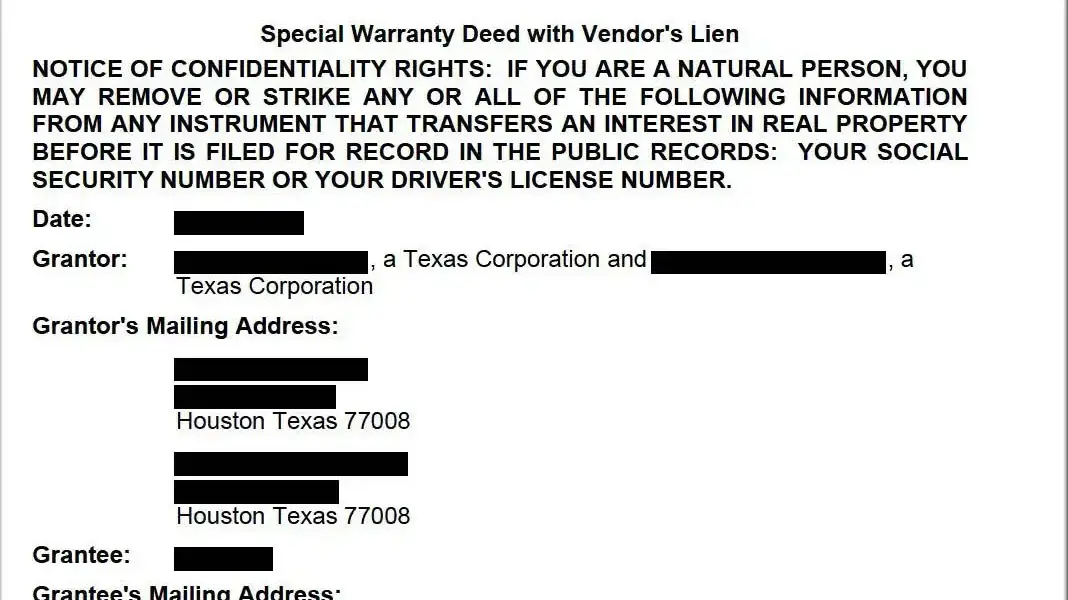
The work started with verification, not drafting. The team confirmed the exact identity details that most often break a deed before drafting a single word. A special warranty mineral deed followed. The attorney reviewed it before the client ever saw it.
The client reviewed and approved the draft from her home state. A signing package went out by mail with a plain-English checklist for execution and notarization. When the original came back, the firm recorded it with the county clerk directly. The team tracked the deed home and confirmed every step with the client.
One more step mattered. The firm notified her son in writing about what he now owned and what the county had recorded. New mineral owners who do not know what they own become the suspense files of the next decade.
The Outcome: What Did the Mineral Rights Transfer Accomplish?
The county recorded the deed within weeks of engagement. Her son now holds recorded title to the family mineral interest. Any future operator or division order analyst can follow the paper trail.
Nothing about this interest will ever need probate. There is no gap for an heirship fight to grow in, and no defect waiting for a title examiner to find.
The client handled everything from out of state. She never traveled, never hunted for a Texas notary rule on her own, and never guessed at a recording requirement.
The Landowner’s Perspective: Why Recording Discipline Matters for Texas Mineral Deeds
From the firm’s side of the table, the deed itself was the easy part. The value was in what did not happen.
No misspelled grantee name sits in the county records. Moreover, there is no signed original left unrecorded in a drawer. No operator will ever have a reason to suspend payment on this interest because of this transfer.
Operators ask one question when they review ownership: who could sue us if we pay the wrong person? A clean, recorded mineral deed answers that question before anyone asks it. That is the standard the firm drafts to, because that is the standard Nixon used to enforce.
Common Questions About Transferring Texas Mineral Rights
Can you deed Texas mineral rights to a minor child?
Not directly, as a practical matter. A minor cannot manage property, sign a lease, or deal with an operator. Transfers meant for a minor need different planning, usually through a trust that properly holds Texas mineral rights. Have that conversation before anyone drafts a deed.
Do I have to come to Texas to sign a mineral deed?
No. You can sign and notarize a Texas mineral deed in any state. The deed just has to meet Texas recording requirements. This client completed every step from the West Coast by mail and email.
What happens if a mineral deed is signed but never recorded?
An unrecorded deed gives the new owner little protection. Texas recording law generally favors whoever records first without notice. Operators will not update ownership from a document missing from the county records.
The Takeaway
We see this situation constantly: out-of-state family, Texas minerals, and a transfer that looks simple until you know the traps. The difference is not the form. The difference is a drafter who has sat on the operator side and knows exactly what gets a deed rejected.
If you want your Texas mineral rights in the right hands while you are here to see it, we can help.
Ready to Discuss Your Mineral Deed?
The Daughtrey Law Firm focuses exclusively on representing Texas landowners and mineral owners. Our Texas mineral deed preparation service handles drafting through recording. A qualification call takes 10 to 15 minutes and costs nothing.
Call 713-669-1498 or schedule at daughtreylaw.com/contact.
DISCLAIMER: This case study describes a real client matter with identifying details changed for privacy. Results vary based on individual circumstances, property characteristics, market conditions, and other factors. Past results do not guarantee similar outcomes for your situation. Every matter is different.
This article provides general information about Texas property law and is not legal advice for your specific situation. Reading this article does not create an attorney-client relationship. For advice about your situation, contact a qualified attorney.
Nixon Daughtrey, licensed Texas attorney, Bar No. 24029503 | The Daughtrey Law Firm PLLC | 2525 Robinhood St., Houston, Texas 77005 | 713-669-1498
